OPEN-DECK LTL FREIGHT SERVICES
FLATBED & STEP DECK LTL FREIGHT
Partial open-deck loads across all 48 states — no cross-docking, no transloading, and no shortcuts on securement. Flatbed, step deck, and Conestoga options available for LTL and FTL.
48 STATES
Nationwide Coverage
3 TRAILER TYPES
Flatbed, Step Deck, Conestoga
NO CROSS-DOCKING
No Transloading — Direct Moves
SINCE 2007
Licensed & Insured Carrier
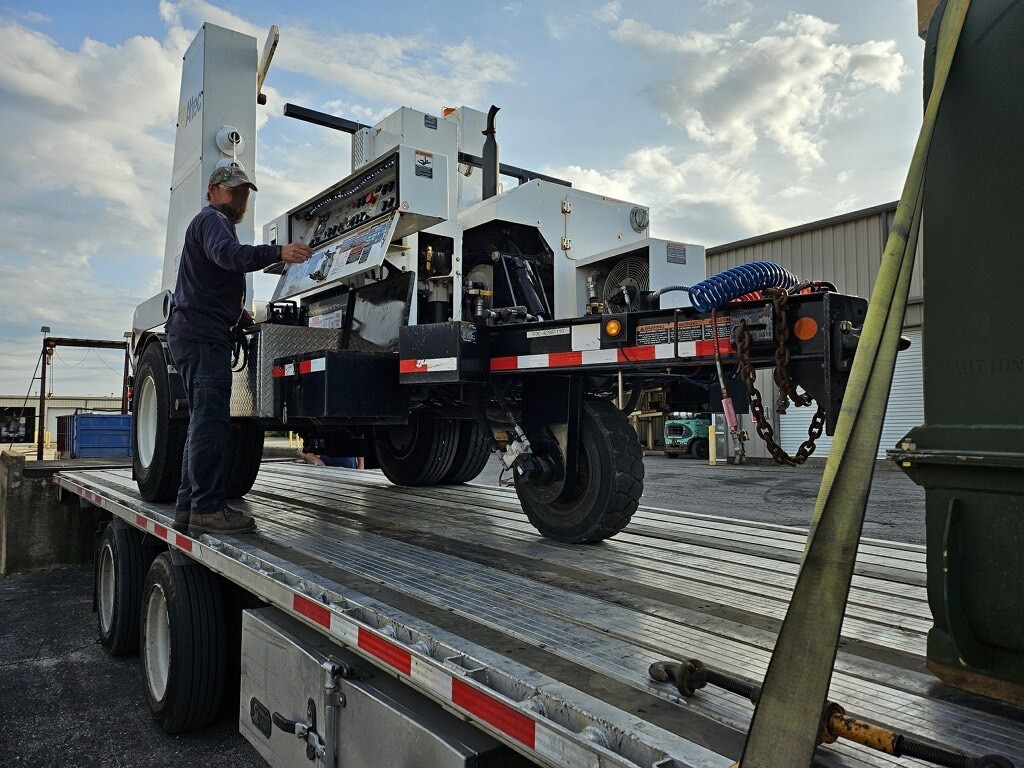
What Is Flatbed & Step Deck LTL Freight?
Flatbed and step deck LTL — less-than-truckload — means your shipment shares trailer space with other freight on an open-deck trailer. It follows the same model as our refrigerated LTL service: no cross-docking and no transloading. Your freight loads once, stays on that trailer, and delivers directly to its destination.
Many flatbed LTL carriers use multi-stop consolidation that extends transit times and adds handling risk. West Coast Carriers does not operate that way. Your freight loads once at origin and delivers directly to its destination — no intermediate transfers, no additional handling points along the route.
This service handles freight that simply will not fit in a standard dry van or enclosed trailer. That includes cargo too wide, too tall, or too awkward to load through the back of a box trailer. It also covers freight that must be loaded from the side — which flatbed and step deck trailers allow from any angle. In some cases, shippers choose open-deck LTL based on cost advantage during certain seasons, since pricing on flatbed and dry van freight can shift significantly depending on capacity and demand.
For LTL classification purposes, we treat shipments under 30 feet in length and under 30,000 pounds as flatbed or step deck LTL. Beyond those thresholds, the load typically moves as a full truckload or requires over-dimensional freight handling. Several other factors also determine classification — including trailer configuration, lane availability, and whether multiple LTL loads can be combined efficiently on one trailer.
Three Trailer Types — One Service
We operate flatbed, step deck, and Conestoga trailers — in both flatbed and step deck configurations — for LTL and FTL shipments across the United States and Canada.
Standard Flatbed
The standard flatbed trailer is an open, flat deck with no sides and no roof. This design allows loading from the rear, sides, or by crane from above. It handles dimensional freight that exceeds dry van clearances, and it works well for machinery, building materials, steel, and large palletized industrial cargo.
Best for: Machinery, lumber, steel, palletized oversize cargo
Step Deck (Drop Deck)
A step deck trailer has two levels — a shorter upper deck and a longer lower deck that sits closer to the ground. That lower position adds critical height clearance for tall cargo that would exceed legal limits on a standard flatbed. Step decks are the right choice when freight height is the primary challenge rather than length or width.
Best for: Tall equipment, tractors, construction machinery, vehicles
Conestoga Trailer
A Conestoga trailer features a retractable aluminum skeleton and tarp system mounted on a flat deck. The tarp rolls back completely for full side-loading access, then closes to provide enclosed weather protection. We operate Conestoga trailers in both standard flatbed and step deck configurations — giving you weather protection and the right deck height for your cargo. Available for both LTL and FTL shipments.
Best for: Weather-sensitive cargo, coiled steel, manufactured goods — flatbed and step deck configurations available
Legal Size & Weight Reference
The table below reflects standard federal size and weight limits under FMCSA size and weight regulations. State-specific rules may vary. Loads exceeding these dimensions require permits and route planning. Contact us for oversize or over-dimensional shipments — we handle those as well.
| Trailer Type | Max Length | Max Width | Max Cargo Height | Max Payload |
|---|---|---|---|---|
| Standard Flatbed | 48–53 ft | 8 ft 6 in | 8 ft 6 in on deck | ~48,000 lbs |
| Step Deck (Drop Deck) | 48–53 ft total | 8 ft 6 in | ~10 ft on lower deck | ~46,000 lbs |
| Flatbed Conestoga | 48–53 ft | 8 ft 6 in | ~8 ft on deck | ~47,000 lbs |
| Step Deck Conestoga | 48–53 ft total | 8 ft 6 in | ~10 ft on lower deck | ~46,000 lbs |
Legal heights are measured from the ground. Step deck lower deck provides approximately 18–20 inches of additional height clearance over a standard flatbed. Conestoga trailers are available in both flatbed and step deck configurations. For oversize or over-dimensional shipments requiring permits, contact us with exact Length, Width, Height, Weight, and make/model if applicable.
How Flatbed & Step Deck LTL Works
Submit Accurate Shipment Details
Provide exact length, width, height, and weight — not estimates. You will also need your origin and destination addresses, the nature of the cargo, and any special loading or securement requirements. Accurate information at this stage protects every shipper on the trailer. For equipment with a make and model, include that as well — it helps us select the right trailer and, if needed, plan any required permits or routes.
Trailer & Lane Matching
We match your shipment to the right trailer type — flatbed, step deck, flatbed Conestoga, or step deck Conestoga — based on your cargo dimensions, loading requirements, and destination lane. Your freight then shares deck space with other compatible LTL shipments moving in the same direction. There is no cross-docking and no transloading at intermediate facilities.
Driver Securement at Origin
The driver secures all freight to the deck before leaving the loading facility — using straps or chains depending on the cargo type. If tarping is required, the driver handles that at origin as well. Some trailers in our network are equipped with built-in scales, which allows the driver to verify actual weight before departure. Every driver also carries a tape measure and will confirm dimensions on the spot when something does not match what was submitted.
Transit & Communication
Your shipment moves directly toward its destination. Our dispatch team monitors ETA windows throughout transit. If anything changes, we contact you proactively — not after the fact. Because your freight shares a trailer with other LTL shipments, on-time performance for every load depends on accurate information from every shipper on that trailer. We take that responsibility seriously on our end and expect the same from every customer.
Delivery & Confirmation
Delivery is made directly to your specified location. No intermediate stops, no warehouse transfers. The driver handles final securement removal and confirms delivery. For oversize or over-dimensional shipments, route permits and any required escort arrangements are confirmed before the truck moves.
Why Accurate Dimensions & Weight Make the Difference
Accurate shipment information is one of the most important tools we have, and getting it right is a benefit to every customer with freight on that trailer. A load running heavier than booked — or taking up more deck space than stated — creates delays that affect everyone. Providing accurate details keeps the driver moving and avoids disruptions that set the whole load back. It really is that straightforward.
Before your freight leaves the loading facility, we photograph every load. Those photos show your product on the deck, how it is secured, and whether it is tarped — and we send them to you before the truck rolls. Most customers tell us this is one of the things they value most about working with us. They can see their freight loaded, confirm the condition at origin, and have a clear reference point for the entire move. No guesswork, no surprises at delivery.
We also verify dimensions and weight at origin. Some trailers in our fleet have built-in scales. Every driver carries a tape measure and will check measurements on the spot when something looks different from what was booked. Catching a discrepancy at the loading dock is a five-minute fix. Finding one at a weigh station 300 miles down the road is a much harder conversation for everyone involved.
Before You Book — Have These Ready
Exact length (ft/in) · Exact width (ft/in) · Exact height (ft/in) · Actual weight (lbs) · Commodity type · Loading method (forklift, crane, side-load) · Make & model if equipment · Origin and destination addresses
Nationwide Coverage — All 48 States
West Coast Carriers moves flatbed and step deck LTL freight across the entire continental United States and into Canada. Our open-deck LTL network spans all 48 states, with particularly strong lane coverage in the central, southern, and eastern United States.
High-volume flatbed and step deck LTL lanes include: Texas, Colorado, Idaho, Utah, Kansas, Oklahoma, Iowa, Missouri, Arkansas, Minnesota, Wisconsin, Illinois, Indiana, Kentucky, Tennessee, Mississippi, Alabama, Georgia, South Carolina, North Carolina, Virginia, Ohio, Michigan, Pennsylvania, New Jersey, Connecticut, and Massachusetts.
We also service California, Oregon, Washington, Nevada, New Mexico, Arizona, and all remaining states. If your origin or destination is within the continental United States, we can move it. Lane availability and pricing vary by season — contact our team for current capacity and rates on your specific lanes.
For Canadian shipments or cross-border moves, contact us directly with your origin, destination, commodity, and dimensions. We handle the routing, documentation, and carrier coordination.
Why West Coast Carriers for Open-Deck LTL
Operating since 2007. Over 5,000 contracted carriers. Licensed, insured, and built for freight that does not fit the standard mold.
Photos of Every Load at Origin
Before your truck rolls, we photograph every load on the trailer. Those photos show your product on the deck, how it is secured, and whether it is tarped. We send them to you before departure so you have a clear record from the moment it leaves.
Verification at Origin, Not at a Weigh Station
We verify dimensions and weight before the truck leaves. Some trailers have built-in scales. Every driver carries a tape measure and checks on the spot when something looks different from what was booked.
No Cross-Docking, No Transloading
Your freight loads once and stays on that trailer. Many flatbed LTL carriers use multi-stop consolidation that adds transit time and handling risk. We do not operate that way. Direct moves protect your cargo and your schedule.
Four Trailer Configurations, One Point of Contact
Standard flatbed, step deck, flatbed Conestoga, step deck Conestoga — one call handles all four. Our team matches your cargo to the right trailer based on dimensions, loading method, and lane.
Flatbed & Step Deck LTL — Frequently Asked Questions
What is the difference between flatbed LTL and step deck LTL?
A standard flatbed has one flat deck level, which limits cargo height to roughly 8.5 feet above the deck. A step deck has two levels — a shorter upper deck and a longer lower deck that sits closer to the ground. That lower position adds approximately 18–20 inches of additional height clearance. If your freight is too tall for a standard flatbed but does not yet require oversize permits, a step deck is usually the right solution. Step decks are also often equipped with ramps, making it easy to drive or roll wheeled and tracked equipment directly onto the lower deck.
What qualifies as flatbed LTL versus a full truckload?
As a general guide, we treat shipments under 30 feet in length and under 30,000 pounds as LTL candidates. Beyond those thresholds, the load is typically more cost-effective — and operationally better suited — as a full truckload on our Flatbed & Step Deck Trucking service. Several other factors affect the classification, including lane availability, trailer configuration, and whether the freight is compatible with other LTL loads on the same trailer.
Does my freight share the trailer with other shippers’ cargo?
Yes. LTL means less-than-truckload — your shipment shares deck space with other freight moving in the same direction. This is what makes LTL pricing more affordable than a dedicated full truckload. There is no cross-docking or transloading at intermediate facilities. Your freight loads once at origin and remains on that trailer until delivery.
Do you photograph my freight before it leaves?
Yes — every load. Before the truck departs, we photograph your freight on the trailer showing the product, how it is secured, and whether it is tarped. Those photos are sent to you before the truck rolls. This gives you a clear record of the condition at origin and confirms the load matches what was booked. Customers consistently tell us this is one of the things they value most about working with us.
Is tarping included, and who handles securement?
The driver handles all securement — straps or chains depending on the cargo type — before leaving the loading facility. Tarping is available on all shipments for an additional fee. If tarping is required, the driver tarps at origin before departure. Conestoga trailers include built-in weather protection at no additional tarping charge. If your cargo is weather-sensitive, let us know when you book so we can assign the appropriate trailer.
Can you move oversized or over-dimensional freight that exceeds LTL limits?
Yes. Shipments exceeding standard legal dimensions or 30,000 pounds move as over-dimensional freight under a dedicated full truckload. For those moves we need exact length, width, height, weight, make and model if applicable, and origin and destination. That information determines the rate, required permits, planned route, travel time restrictions, and proper equipment selection.
Do flatbed and step deck LTL rates change by season?
Yes. Open-deck freight pricing shifts throughout the year based on carrier capacity, demand on specific lanes, and the relative cost of flatbed versus dry van service. There are periods when flatbed LTL rates are significantly lower than enclosed van options, and periods when the reverse is true. Contact our team for current rates on your specific origin-destination lane — we will tell you what is competitive at the time of booking.
Related Services
Flatbed & Step Deck Trucking
Full truckload flatbed and step deck service for dedicated loads, oversized equipment, and freight that needs the entire trailer.
Over Dimensional Freight
Loads exceeding standard legal dimensions or weight limits. Permits, route planning, and escort coordination included.
Refrigerated LTL
Temperature-controlled LTL freight for food, pharma, and perishable cargo — no cross-docking, direct moves, all 48 states.
Ready to Move Your Open-Deck LTL Freight?
Have your dimensions, weight, and origin-destination ready. Our team will match you to the right trailer, confirm the rate, and get your freight moving.