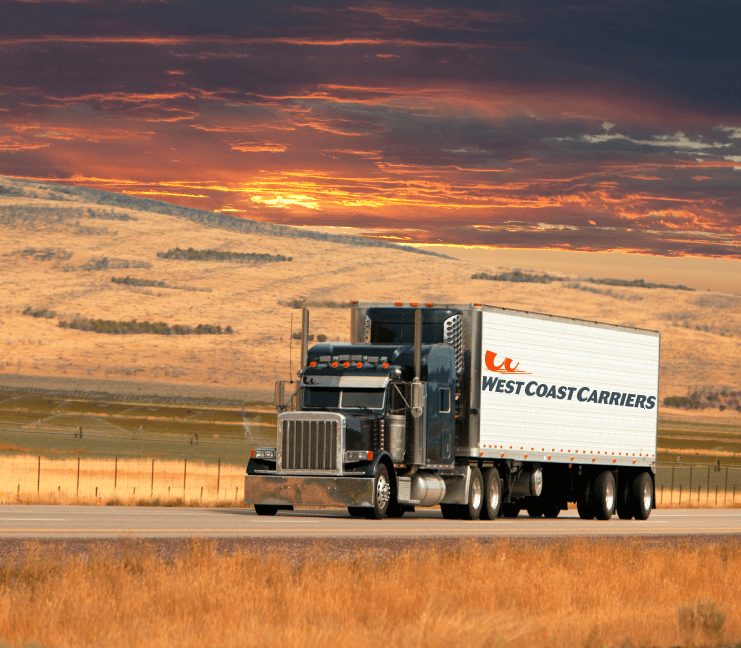

Rising Fuel Costs & Refrigerated Trucking Services: Why WCCT Is the best Choice for Reefer Freight

How the Right Trucking Partner Helps Shippers, Manufacturers, and Freight Forwarders Overcome Today’s Supply Chain Challenges
April 6, 2026
Why Refrigerated Trucking Companies Are Feeling the Squeeze — And What Smart Shippers Are Doing About It
When diesel prices climb, every link in the cold chain tightens. Here’s what’s driving costs up, what it means for your freight, and why WCCT provides the most reliable refrigerated transport service and is built exactly for this market.
Refrigerated trucking companies across the country are navigating one of the most challenging cost environments in recent memory. Fuel prices remain elevated. Spot market rates swing with unsettling volatility. Shippers of perishable goods, frozen products, pharmaceuticals, and fresh produce sit caught right in the middle.
Managing time-sensitive freight reliably while costs creep upward is no easy task. If you’ve shipped refrigerated freight lately, or simply bought groceries, ordered flowers, or picked up a prescription, you’ve already felt the impact.
This article breaks down the real drivers behind rising fuel costs. It explains how those increases work their way into the price of everyday goods. It also shows why choosing the right refrigerated trucking partner is one of the most critical supply chain decisions a shipper can make right now.
West Coast Carriers (WCCT) provides refrigerated full truckload services across all 48 contiguous states. Read on to learn what separates a reliable refrigerated carrier from the rest and why WCCT continues to earn the trust of shippers, manufacturers, and freight forwarders coast to coast.
What Is Driving Fuel Costs Higher for Refrigerated Trucking Companies
Nobody fills a diesel tank and smiles these days. Diesel, the lifeblood of every reefer unit on the road, moves in price response to a complex web of global and domestic forces. Understanding what’s behind the numbers helps shippers make smarter decisions about their cold chain partnerships.
Global Crude Oil Markets and Geopolitical Instability
The trucking industry runs on diesel. Refineries produce diesel from crude oil, a globally traded commodity subject to enormous geopolitical pressure. OPEC+ production cuts send crude prices climbing fast. Conflicts that disrupt key oil-producing regions, or sanctions that restrict supply from major exporters, push them even higher. Those upstream shocks travel straight downstream, and refrigerated trucking carriers pay the result at the pump every single day.
Domestic refinery capacity has also failed to keep pace with demand. Operators have taken several aging refineries offline. New replacement capacity has come online slowly. Markets then grow highly sensitive to any supply disruption, and prices surge quickly when conditions tighten.
Seasonal Demand Shifts and Refinery Transitions
Fuel prices respond to seasonal demand patterns in ways that hit refrigerated freight shippers particularly hard. Peak produce season coincides with elevated diesel demand nationwide. Reefer trucks are hauling California lettuce, Florida citrus, and Pacific Northwest berries at full capacity during these peaks.
On top of that, refineries transition between summer and winter fuel blends each year. That regulatory switch temporarily reduces output. It nudges prices upward at exactly the moments when reefer capacity is already tightest.
Environmental Regulations and Fleet Upgrade Costs
Tightening environmental regulations around diesel-powered reefer units add another real layer of cost. Carriers must invest in cleaner reefer technology and keep compliance current with EPA and state-level standards. They also absorb the expense of transitioning to lower-emission equipment. These costs don’t vanish, they move through the supply chain and eventually reach shippers and consumers.
Why Refrigerated Trucking Carriers Face a Bigger Fuel Burden Than Dry Freight
Rising diesel prices hurt all trucking, but refrigerated trucking carriers carry a double burden that dry freight operators don’t. Every reefer truck runs two fuel-consuming engines simultaneously. One powers the truck itself. The other runs the trailer’s independent refrigeration system.
A standard reefer unit burns between 0.5 and 1.0 gallons of diesel per hour just to hold temperature. That happens regardless of road speed or distance traveled. On a three-day run from Los Angeles to the East Coast, the refrigeration engine adds 75 to 100 extra gallons on top of the drive engine’s fuel. Multiply that across a full fleet at today’s diesel prices. The cost impact becomes very clear, very fast.
That double fuel burn explains why refrigerated freight surcharges run higher than dry van rates. Shippers benefit from working with carriers who calculate and communicate those surcharges transparently, no guessing, no invoice surprises.
Air Chute Systems: Temperature Control and Fuel Efficiency Together
One technology that separates a well-equipped refrigerated trucking company from a lesser one is the air chute system. An air chute runs along the ceiling of the trailer. It pushes cold air evenly from front to back throughout the entire load.
Without one, cold air stratifies and pools. Warm zones develop near the doors or in the trailer’s center. Those hot spots compromise perishable goods, create food safety violations, and cause rejected loads at delivery. Proper air chute distribution also lets the reefer unit cycle more efficiently, cutting total fuel consumption on the haul.
Meat, seafood, dairy, produce, and frozen goods all depend on this even airflow. Not as a convenience, as a non-negotiable requirement for temperature reliability and compliance.
How Rising Fuel Costs Affect the Price of Everything You Buy
Most consumers don’t connect the price of a grocery item to the diesel in a reefer truck, but the link is direct. Cold chain logistics moves perishable goods through an unbroken series of temperature-controlled steps. Think of a salmon fishery in Alaska to a restaurant in Chicago. Or a pharmaceutical plant in New Jersey supplying a clinic in rural Ohio. Every step runs on refrigerated trucking services. When fuel costs rise, those costs don’t disappear, they move forward through the chain.
Food and Beverage: A Direct Line From Reefer Costs to Retail Prices
Manufacturers and distributors of food and beverage products run on tight margins. When refrigerated shipping rates rise, from fuel surcharges, higher spot market rates, or shrinking reefer capacity, those added costs must go somewhere. They flow into the retail price of the product.
Meat, seafood, dairy, and fresh produce rank among the most fuel-cost-sensitive categories in the supply chain. Every cut of beef, every pound of wild-caught shrimp, every case of organic strawberries has ridden inside a refrigerated trailer. When operating that trailer costs more, the shelf price goes up.
Pharmaceutical Logistics and Cosmetics: High-Stakes Cold Chain Freight
Pharmaceutical logistics ranks among the fastest-growing and most demanding segments in cold chain freight. Carriers must maintain medications, vaccines, biologics, and clinical trial materials within precise temperature windows, often 2°C to 8°C or tighter, throughout the entire journey. One excursion outside those parameters can render a shipment worthless, or worse, dangerous.
Cosmetic and beauty products, serums, specialty skincare formulations, and treatments, also require climate-controlled transport. Rising refrigerated shipping costs hit these high-value categories especially hard. Temperature failure can destroy cargo that shippers cannot easily replace.
FDA regulations governing temperature-sensitive pharmaceutical transport are strict. Documentation requirements, including continuous data logging during transit, carry no flexibility. Carriers who can’t produce compliant temperature records expose shippers to serious regulatory liability.
Flowers and Plants: The Perishable Freight Nobody Talks About Enough
The floral industry runs entirely on refrigerated trucking services, and on some of the tightest delivery windows in the freight business. A truckload of roses from a Colombian grower flies into Miami, clears customs, and loads onto a reefer truck. From that moment, the clock is ticking, perhaps four to five days of viable shelf life remaining. Delays, temperature excursions, or rough handling shorten that window fast.
When fuel costs push spot market rates up and reefer capacity tightens, floral shippers face real business risk. A Valentine’s Day shipment that arrives damaged or late isn’t just a lost sale. It’s a retail relationship that may take years to rebuild.
The Surge in Spot Market Rates and What It Means for Refrigerated Freight Shippers
Beyond base fuel costs, the refrigerated freight spot market has seen dramatic rate volatility in recent years. Shippers booking reefer loads without long-term contracts have watched prices swing more sharply than at almost any point in recent trucking history.
Multiple forces push spot rates higher in the reefer segment. Driver shortages, hours-of-service regulations, and limited reefer equipment supply all tighten available capacity, and when supply shrinks, rates move up quickly. Seasonal peaks compound the pressure. The California and Arizona winter vegetable harvest, the Pacific Northwest berry season, and the Florida citrus runs all drive regional reefer rates to premium levels with predictable regularity.
When elevated fuel costs arrive at the same time as seasonal capacity crunches, the combination hits hard. Shippers without established carrier relationships scramble for capacity at rates 30%, 40%, or even 50% above contracted levels. They also have no guarantee the carrier can meet temperature compliance or on-time delivery requirements.
In a volatile spot market, your carrier relationship is your best insurance policy. Build it before you need it.
Why West Coast Carriers Is One of the Most Trusted Refrigerated Trucking Companies in the Country
In a market defined by fuel cost volatility, tightening capacity, and unforgiving regulatory requirements, the choice of refrigerated trucking partner matters more than ever. West Coast Carriers has earned its reputation by delivering on exactly the things that count when pressure is on. Temperature reliability, speed, transparency, compliance, and genuine value, these aren’t marketing words at WCCT. They’re operating standards.
Nationwide Refrigerated Coverage — All 48 States
WCCT runs refrigerated full truckload services throughout the entire continental United States. Fresh Pacific salmon from Seattle reaches the Gulf Coast. Florida citrus moves to the upper Midwest. Pharmaceutical shipments travel from New England manufacturers to West Coast distribution centers. Floral freight ships from Miami to retail markets nationwide. WCCT has the lanes, the capacity, and the operational experience to handle all of it.
That nationwide reach goes beyond geography. The team knows which lanes tighten during produce season. WCCT knows where capacity contracts during peak periods and how to route loads efficiently. Both temperature compliance and delivery windows stay protected on every shipment.
Temperature Reliability and Compliance: The Non-Negotiables
WCCT treats every piece of refrigerated freight as if its condition is someone’s livelihood, because it is. Modern reefer equipment with continuous temperature monitoring and electronic data logging covers every shipment from pickup through delivery. Temperature records stay available for review at any time. They meet FDA regulations, FSMA guidelines, and the compliance standards required by pharmaceutical logistics clients.
Air chute systems in WCCT trailers distribute cold air uniformly across the full load. Fresh produce at 34°F, frozen goods at -10°F, pharmaceuticals within a precise 2°C to 8°C window, cosmetic products needing stable climate control, WCCT’s equipment holds temperature with precision across all of these commodity types.
For shippers who need multi-temperature capability, chilled and frozen products on the same trailer, WCCT’s operations team configures the right equipment and load plan to handle it correctly.
Data Logging: Full Visibility and Full Accountability
In today’s regulated cold chain environment, continuous data logging is an expectation, not a bonus. WCCT provides electronic temperature records for every refrigerated shipment. Shippers, manufacturers, and freight forwarders receive a complete, verifiable account of temperature conditions from origin to destination.
Those records serve multiple critical purposes. Food safety documentation satisfies FDA and USDA compliance requirements. Pharmaceutical shippers receive the chain-of-custody temperature verification required for drug integrity confirmation. In any damage claim situation, the data protects all parties with an objective record.
Shippers also gain peace of mind. They know exactly what happened to their freight between pickup and delivery, not just what a driver reports after the fact.
Load Securement and Produce Handling: Protecting What’s Inside the Trailer
Refrigerated freight is often delicate freight. Fresh produce bruises easily. Cases of seafood shift under braking. Stacked dairy pallets can topple in transit. Pharmaceutical shipments follow specific handling protocols. Each of these realities demands more than a basic approach to load securement.
WCCT’s load securement approach goes well beyond the bare minimum. WCCT ensures all drivers utilize load bars, pallet locks, bulkheads, E-track systems, straps and appropriate dunnage or air bags as needed, applying proven expertise with every load shipped. The entire team understands that how a load is built and loaded at origin directly determines the integrity of the load that arrives at destination.
Produce handling expertise makes a real difference on specialty commodity loads. Many refrigerated trucking companies don’t fully understand pre-cooling requirements for fresh leafy greens. Others miss the respiration heat a full trailer of strawberries generates, or the ventilation needs of certain fresh commodities. WCCT’s drivers and operations teams bring that specific knowledge to every single load.
Reliability and Speed: Delivering When It Matters Most
In the perishable goods business, time is always money, and sometimes much more than that. Late freight isn’t a minor inconvenience. It can be a business crisis.
A late delivery of fresh salmon to a restaurant group the Friday before a holiday weekend puts a client in a real bind. Missing a pharmaceutical delivery window at a hospital can disrupt patient care. Arriving a day late with floral freight for a wedding is simply a disaster with no fix.
Speed and reliability sit at the core of how WCCT operates. The team takes every appointment seriously. Experienced, professional drivers understand the urgency of time-sensitive freight. Operations staff monitor active loads continuously and communicate proactively when weather, traffic, or hours-of-service conditions require adjustments.
In a freight market where reliability gets promised more often than delivered, WCCT’s track record does the talking.
Value: Transparent, Competitive Pricing With No Hidden Surprises
Value in refrigerated trucking isn’t the same as the lowest rate. A low spot market quote from a carrier with questionable temperature control, no data logging, and a history of late deliveries isn’t a bargain, it’s a liability waiting to happen.
Real value means competitive, transparent pricing combined with service quality that protects your freight, your compliance standing, and your customer relationships. WCCT explains upfront how fuel surcharges work, how accessorial charges apply, and what shippers can expect for transit times and communication.
Freight invoices full of surprise charges that were never mentioned are a real problem in this industry. WCCT takes a different approach, transparent pricing from the first conversation. High-volume shippers and freight forwarders seeking contract rates find competitive lane pricing backed by consistent service.
What West Coast Carriers Hauls: A Full Spectrum of Temperature-Controlled Freight
WCCT serves a wide range of industries and product categories that depend on refrigerated trucking services. Our daily freight includes:
- Meat and Poultry — Fresh and frozen beef, pork, chicken, and specialty meats requiring strict temperature maintenance and food safety compliance throughout transit.
- Seafood — Wild-caught and farm-raised fish, shellfish, and processed seafood products, both fresh-chilled and frozen, where temperature excursions can destroy product value within hours.
- Dairy Products — Milk, cheese, butter, yogurt, and specialty dairy requiring consistent refrigeration from manufacturing plant to distribution center to retail.
- Fresh Produce — Fruits, vegetables, leafy greens, berries, herbs, and specialty produce with commodity-specific temperature, humidity, and ventilation requirements.
- Frozen Goods — Ice cream, frozen entrees, frozen seafood, and other frozen products requiring consistent sub-zero temperatures in all weather and operating conditions.
- Pharmaceuticals — Temperature-sensitive medications, vaccines, biologics, and clinical trial materials requiring FDA-compliant cold chain management, continuous data logging, and documented chain of custody.
- Cosmetic and Beauty Products — Temperature-sensitive skincare, serums, and specialty formulations requiring climate control to preserve product integrity and shelf life from manufacturer to retailer.
- Flowers and Plants — Cut flowers, potted plants, and floral arrangements requiring refrigerated transport with specific humidity and temperature management to maintain freshness and appearance.
- Food and Beverage — Chilled juices, specialty beverages, deli products, prepared meals, and other food and beverage products requiring consistent cold chain management across long-haul lanes.
The Bottom Line: In a Tough Market, Your Carrier Choice Defines Your Risk
Rising fuel costs and volatile spot market rates aren’t temporary inconveniences waiting to resolve themselves. These reflect structural features of today’s freight market. Geopolitical forces, regulatory pressures, and supply dynamics shape them, and none of those forces are going away anytime soon.
Shippers, manufacturers, and freight forwarders who depend on cold chain logistics need a smarter response than chasing the cheapest available rate. Build relationships with refrigerated trucking companies that consistently deliver what they promise: temperature reliability, complete data logging, compliance documentation, honest pricing, and service consistency. Those qualities protect your product, your customers, and your business reputation.
West Coast Carriers built its foundation on exactly that mission. The team covers frozen goods from the Pacific Northwest, fresh produce from the Salinas Valley, pharmaceutical products from Midwest manufacturing facilities, and floral freight from Miami to markets nationwide. WCCT brings the equipment, expertise, and genuine commitment to move your freight in the condition it needs to arrive, every time.
In a market this demanding, that kind of reliability isn’t just a nice-to-have. It’s everything.
Ready to move your refrigerated freight with a company you can depend on? Contact West Coast Carriers today and find out why shippers across the country trust WCCT with their most valuable, most perishable, and most time-sensitive loads.